

Hey there! As a supplier of ERW Pipe Scaffolding, I often get asked about the surface treatment of these products. So, I thought I'd take a deep - dive into this topic and share some insights with you all.
First off, let's understand what ERW Pipe Scaffolding is. ERW stands for Electric Resistance Welded. These pipes are made by rolling metal strips and then welding the seams using electric resistance. They're super popular in scaffolding because they're cost - effective, have good strength, and are relatively easy to produce. You can check out more about ERW Steel Pipe ASTM A53 Pipe and ERW Steel Pipe Carbon Steel Pipe on our website.
Now, onto the surface treatment. Surface treatment is crucial for ERW Pipe Scaffolding for a few reasons. It protects the pipes from corrosion, which can weaken the structure over time. It also enhances the aesthetic appeal and can improve the overall durability of the scaffolding.
Galvanizing
One of the most common surface treatments for ERW Pipe Scaffolding is galvanizing. There are two main types: hot - dip galvanizing and electro - galvanizing.
Hot - dip galvanizing is a process where the pipes are dipped into a bath of molten zinc. This creates a thick, protective layer on the surface of the pipe. The zinc reacts with the air to form a layer of zinc oxide, which further protects the pipe from corrosion. It's a great option because it offers long - term protection, even in harsh environments. However, it can be a bit more expensive and the process can add some weight to the pipes.
Electro - galvanizing, on the other hand, uses an electric current to deposit a thin layer of zinc onto the pipe. It's a quicker and cheaper process compared to hot - dip galvanizing. But the protective layer is thinner, so it might not be as effective in very corrosive conditions.
Painting
Painting is another popular surface treatment. You can choose from a wide range of paints, each with its own benefits. For example, epoxy paints are known for their excellent adhesion and chemical resistance. They can form a tough, protective barrier on the surface of the ERW Pipe Scaffolding.
Acrylic paints are more flexible and can withstand some movement without cracking. They also come in a variety of colors, so you can pick one that suits your aesthetic needs. When painting the pipes, it's important to prepare the surface properly. This usually involves cleaning the pipes to remove any dirt, grease, or rust. Then, a primer is applied to improve the paint's adhesion.
Powder Coating
Powder coating is a modern and efficient surface treatment method. In this process, a dry powder is electrostatically applied to the pipes. The pipes are then heated, which causes the powder to melt and form a smooth, hard coating.
Powder coating has several advantages. It's environmentally friendly because it doesn't use solvents like traditional paints. The coating is also very durable and resistant to chipping, scratching, and fading. Plus, it can give the ERW Pipe Scaffolding a sleek, professional look.
3PE, 3PP, FBE, and TPEP Coating
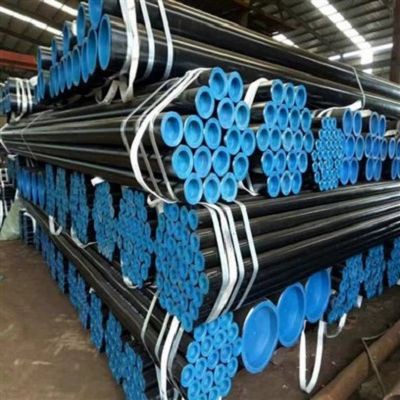
For more specialized applications, we offer 3pe 3pp Fbe Tpep Coating ERW Pipe. These coatings are designed to provide high - performance protection in extreme conditions.
3PE (Three - Layer Polyethylene) coating consists of an epoxy primer, a copolymer adhesive, and a polyethylene top layer. It offers excellent corrosion resistance and mechanical protection. 3PP (Three - Layer Polypropylene) is similar to 3PE but uses polypropylene instead of polyethylene. It's more suitable for high - temperature environments.
FBE (Fusion - Bonded Epoxy) coating is applied as a powder and then fused to the pipe surface using heat. It forms a hard, seamless coating that provides good corrosion protection. TPEP (Tight - Fit Polyethylene Encapsulation) is a combination of a corrosion - resistant epoxy coating and a polyethylene outer layer. It offers superior protection against both corrosion and mechanical damage.

Choosing the Right Surface Treatment
So, how do you choose the right surface treatment for your ERW Pipe Scaffolding? Well, it depends on a few factors.
The environment where the scaffolding will be used is a major consideration. If it's going to be in a coastal area with high salt content in the air, hot - dip galvanizing or a more robust coating like 3PE might be the best choice. For indoor use or in a less corrosive environment, painting or electro - galvanizing could be sufficient.
Your budget also plays a role. Galvanizing and some of the specialized coatings can be more expensive, while painting is generally more budget - friendly. And of course, aesthetic preferences matter too. If you want a specific color or a certain look for your scaffolding, you'll need to choose a surface treatment that can achieve that.
Maintenance
Once the surface treatment is applied, proper maintenance is still important. Regular inspections should be carried out to check for any signs of damage or corrosion. If you notice any chips or scratches in the coating, it's important to repair them as soon as possible to prevent corrosion from starting.
Conclusion
In conclusion, surface treatment is a vital part of ERW Pipe Scaffolding. Whether it's galvanizing, painting, powder coating, or one of the specialized coatings, each method has its own pros and cons. By understanding the different options and considering your specific needs, you can choose the right surface treatment to ensure the longevity and safety of your scaffolding.
If you're in the market for ERW Pipe Scaffolding and want to discuss the best surface treatment options for your project, feel free to reach out. We're here to help you make the right choice and provide you with high - quality products.
References
- ASM Handbook Volume 5: Surface Engineering
- Corrosion Basics: An Introduction by National Association of Corrosion Engineers (NACE)
- Painting and Coating Technology: Principles and Practice by J. David Smith