

Hey there! As a supplier of LSAW steel pipes, I often get asked about the fire - resistance of these pipes. So, I thought I'd sit down and write this blog to share some insights on this topic.
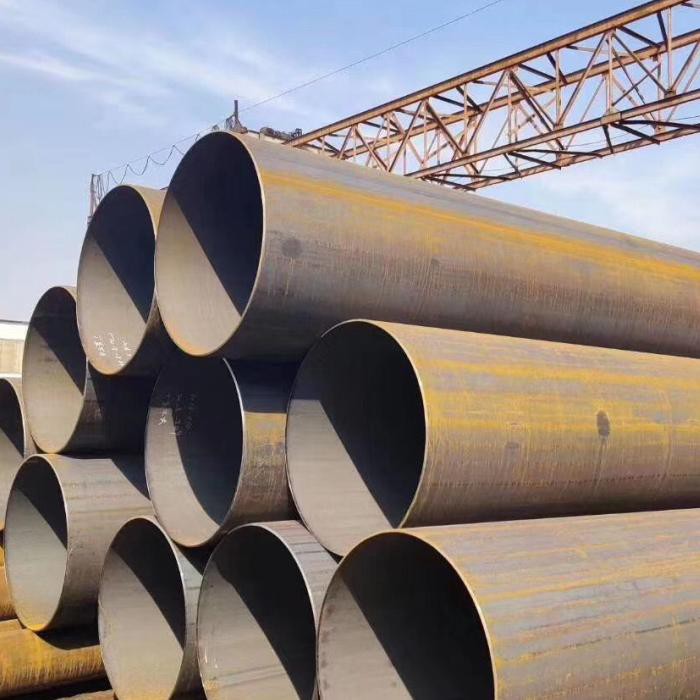
First off, let's understand what LSAW steel pipes are. Longitudinal Submerged Arc Welded (LSAW) steel pipes are made by bending a steel plate into a cylindrical shape and then welding the seam using the submerged arc welding process. These pipes are widely used in various industries, including oil and gas, construction, and infrastructure, thanks to their high strength and reliability.
Now, onto the main question: what's the fire - resistance of LSAW steel pipes? Well, steel is a non - combustible material, which means it won't catch fire on its own. However, its properties can change significantly when exposed to high temperatures.
When steel is heated, it starts to lose its strength. At around 500°C (932°F), steel begins to experience a reduction in its yield strength. As the temperature rises further, the loss of strength becomes more pronounced. By the time the temperature reaches about 800 - 900°C (1472 - 1652°F), the steel can lose up to 80% of its original strength. This is a crucial point because in a fire situation, the structural integrity of the steel pipe can be severely compromised.
The fire - resistance of LSAW steel pipes depends on several factors. One of the key factors is the thickness of the pipe wall. Thicker - walled pipes generally have better fire - resistance because they can take longer to heat up to the point where their strength is significantly reduced. For example, a pipe with a thicker wall will have more mass, and it will require more heat energy to raise its temperature compared to a thinner - walled pipe.
Another factor is the presence of any protective coatings. Some LSAW steel pipes can be coated with fire - resistant materials. These coatings act as a barrier between the steel and the heat source, slowing down the rate at which the steel heats up. There are different types of fire - resistant coatings available, such as intumescent coatings. Intumescent coatings expand when exposed to heat, forming a thick, insulating layer that helps to protect the steel beneath.
The design and installation of the LSAW steel pipes also play a role in their fire - resistance. If the pipes are installed in a way that allows for proper ventilation and heat dissipation, they may be able to withstand a fire for a longer period. For instance, pipes that are not tightly packed together and have some space around them can release heat more effectively.
In the oil and gas industry, where LSAW steel pipes are commonly used for transporting fluids, fire - resistance is of utmost importance. In case of a fire, the pipes need to maintain their integrity for a certain period to prevent the spread of the fire and the leakage of hazardous materials. That's why standards and regulations are in place to ensure that the pipes meet specific fire - resistance requirements.
For example, the [ASTM A252 Steel Pipe Casing](/lsaw - steel - pipe/astm - a252 - steel - pipe - casing.html) is a type of LSAW steel pipe that is often used in piling applications. It needs to have a certain level of fire - resistance to ensure the safety of the overall structure. Similarly, the [LSAW Api 5l Steel Pipe](/lsaw - steel - pipe/lsaw - api - 5l - steel - pipes.html) and [LSAW Line Pipe](/lsaw - steel - pipe/lsaw - line - pipe.html) used in oil and gas pipelines also need to be able to withstand fire conditions to prevent disasters.
To test the fire - resistance of LSAW steel pipes, various methods are used. One common method is the fire test, where the pipes are exposed to a controlled fire environment in a laboratory. During the test, the temperature of the pipe is monitored, and its structural integrity is evaluated over a specific period. The results of these tests help manufacturers and users determine if the pipes meet the required fire - resistance standards.
As a supplier, I understand the importance of providing high - quality LSAW steel pipes with good fire - resistance. We work closely with our customers to understand their specific needs and provide pipes that meet or exceed the relevant standards. Whether it's for a small construction project or a large - scale oil and gas pipeline, we ensure that our pipes are reliable and safe.
If you're in the market for LSAW steel pipes and are concerned about their fire - resistance, don't hesitate to reach out. We can provide you with detailed information about the fire - resistance properties of our pipes, as well as offer advice on the best solutions for your project. We believe in building long - term relationships with our customers, and we're committed to providing the best products and services.
In conclusion, while LSAW steel pipes are made of non - combustible steel, their fire - resistance is affected by factors like wall thickness, protective coatings, and installation. By understanding these factors and ensuring that the pipes meet the necessary standards, we can use LSAW steel pipes safely in various applications, even in fire - prone environments. So, if you're looking for reliable LSAW steel pipes, give us a chance to serve you.
References:

- Steel Construction Manual, American Institute of Steel Construction
- ASTM International Standards related to steel pipes
- Research papers on the fire behavior of steel structures