

Hey there! I'm a supplier of LSAW Line Pipe, and I'm super excited to share with you all about the acceptance criteria for this type of pipe. LSAW (Longitudinal Submerged Arc Welded) Line Pipe is widely used in various industries, especially in the oil and gas sector, for transporting fluids over long distances. So, let's dive right in and see what it takes for an LSAW Line Pipe to meet the standards.
1. Dimensions and Tolerances
One of the first things we look at when assessing LSAW Line Pipe is its dimensions. The diameter, wall thickness, and length of the pipe need to be within the specified tolerances. For example, if a customer orders a pipe with a certain outer diameter, say 24 inches, it's crucial that the actual diameter of the pipe we supply is close to this value. Usually, there are industry - standard tolerances for these dimensions.
A common standard for these tolerances is set by organizations like the American Petroleum Institute (API). API standards ensure that the pipes are consistent in size, which is essential for proper installation and connection in a pipeline system. If the dimensions are off, it can lead to problems during welding, fitting, or even cause leaks in the long run.
2. Material Quality
The material used to make LSAW Line Pipe is of utmost importance. We typically use high - quality steel for these pipes. The steel should have the right chemical composition, including elements like carbon, manganese, sulfur, and phosphorus. Each element plays a specific role in determining the properties of the steel.
For instance, carbon affects the strength of the steel. Too much carbon can make the steel brittle, while too little can result in low strength. Manganese helps improve the toughness and hardenability of the steel. Sulfur and phosphorus are usually kept at low levels because they can have a negative impact on the weldability and ductility of the steel.
We often refer to standards such as ASTM A252 Steel Pipe Casing and ASTM A672 Pipe to ensure that the material we use meets the required quality. These standards provide detailed specifications for the chemical composition and mechanical properties of the steel.
3. Weld Quality
Since LSAW Line Pipe is welded longitudinally, the quality of the weld is a critical acceptance criterion. The weld should be free from defects such as cracks, porosity, lack of fusion, and slag inclusions. These defects can weaken the pipe and increase the risk of failure under pressure.
To ensure good weld quality, we use advanced welding techniques and equipment. We also perform non - destructive testing (NDT) on the welds. NDT methods include ultrasonic testing (UT), radiographic testing (RT), and magnetic particle testing (MT). Ultrasonic testing is used to detect internal defects in the weld, while radiographic testing can provide a clear image of the weld's internal structure. Magnetic particle testing is useful for detecting surface and near - surface defects.
4. Mechanical Properties
The mechanical properties of LSAW Line Pipe are also carefully evaluated. These properties include tensile strength, yield strength, and elongation. Tensile strength is the maximum stress a pipe can withstand before it breaks. Yield strength is the stress at which the pipe begins to deform permanently. Elongation measures how much the pipe can stretch before breaking.
For example, LSAW Api 5l Steel Pipe has specific requirements for these mechanical properties. API 5L standards ensure that the pipes can handle the high pressures and stresses encountered in pipeline operations. We conduct mechanical tests on samples taken from the pipes to verify that they meet these requirements.

5. Surface Finish
The surface finish of the LSAW Line Pipe is another important aspect. The pipe should have a smooth surface without any significant scratches, dents, or corrosion. A rough surface can cause problems during the coating process, which is often applied to protect the pipe from corrosion.

We use various methods to achieve a good surface finish. This may include grinding, sandblasting, or pickling. After the surface treatment, the pipe is ready for coating. A proper coating, such as epoxy or polyethylene, can significantly extend the lifespan of the pipe, especially in harsh environments.
6. Coating Quality
If the LSAW Line Pipe is coated, the quality of the coating is a key acceptance criterion. The coating should be evenly applied, have the right thickness, and adhere well to the pipe surface. A poor - quality coating can lead to corrosion, which can compromise the integrity of the pipe.
We follow strict procedures when applying the coating. First, the pipe surface is properly prepared to ensure good adhesion. Then, the coating is applied using the appropriate method, such as spray coating or extrusion. After application, the coating is inspected for thickness, uniformity, and adhesion.
7. Documentation and Certification
Finally, proper documentation and certification are essential for the acceptance of LSAW Line Pipe. We provide customers with a detailed mill test certificate (MTC) that includes information about the pipe's dimensions, material composition, mechanical properties, and test results. The MTC serves as proof that the pipe meets the specified standards.
In addition to the MTC, we may also provide other certifications, such as ISO 9001 for quality management systems. These certifications give customers confidence in the quality of our products.
So, there you have it! These are the main acceptance criteria for LSAW Line Pipe. As a supplier, we take these criteria very seriously to ensure that we provide our customers with high - quality pipes that meet their needs.
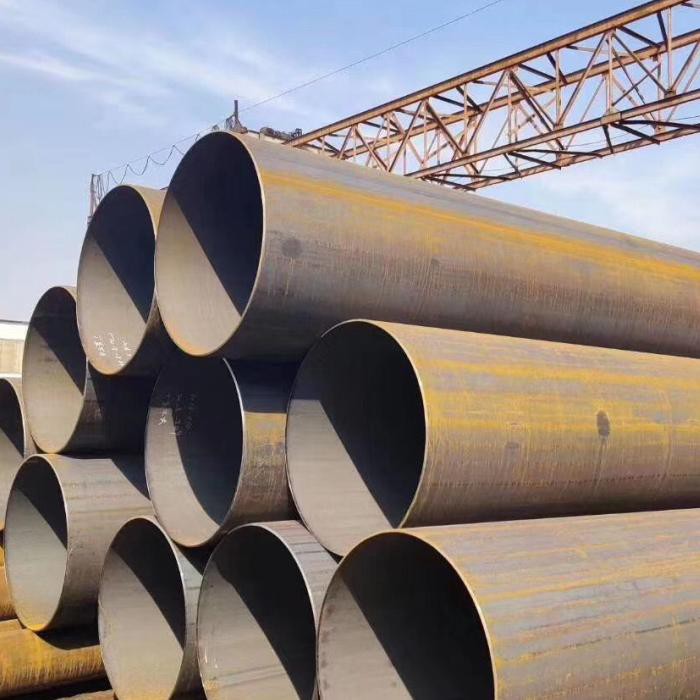
If you're in the market for LSAW Line Pipe and have any questions or are interested in a purchase, feel free to reach out to us. We're more than happy to discuss your requirements and offer the best solutions for your projects.
References
- American Petroleum Institute (API) standards
- ASTM International standards