

As a supplier of ERW (Electric Resistance Welded) Structure Pipe, I've witnessed firsthand the dynamic shifts and emerging trends in the research and development of this essential product. ERW Structure Pipe is widely used in various industries, including construction, automotive, and infrastructure. Understanding the R&D trends is crucial for staying competitive and meeting the evolving needs of our customers.
1. Material Innovation
One of the most significant trends in ERW Structure Pipe R&D is material innovation. Traditional carbon steel has long been the standard for ERW pipes, but there is a growing demand for materials with enhanced properties. High-strength low-alloy (HSLA) steels are becoming increasingly popular due to their superior strength-to-weight ratio. These steels allow for the production of lighter pipes without sacrificing structural integrity, which is particularly beneficial in applications where weight reduction is critical, such as in the automotive and aerospace industries.
Another area of material research is the development of corrosion-resistant steels. Corrosion is a major concern in many environments, especially in marine and industrial settings. By adding alloying elements such as chromium, nickel, and molybdenum, manufacturers can create pipes that are highly resistant to rust and other forms of corrosion. This not only extends the service life of the pipes but also reduces maintenance costs.
2. Advanced Manufacturing Techniques
The manufacturing process of ERW Structure Pipe is also undergoing significant improvements. One of the key trends is the adoption of advanced welding technologies. Modern ERW welding machines are equipped with sophisticated control systems that can precisely regulate the welding parameters, resulting in higher quality welds. For example, high-frequency induction welding (HFIW) is becoming more prevalent due to its ability to produce consistent and high-strength welds.
In addition to welding, there are also advancements in the forming and sizing processes. Computer-aided design (CAD) and computer-aided manufacturing (CAM) technologies are being used to optimize the shape and dimensions of the pipes. This allows for more precise control over the final product, reducing waste and improving efficiency.
3. Coating Technologies
Coating is an important aspect of ERW Structure Pipe to protect it from corrosion and other environmental factors. There are several coating technologies available, each with its own advantages and applications. 3pe 3pp Fbe Tpep Coating ERW Pipe is a popular option that provides excellent corrosion resistance. This type of coating consists of multiple layers, including a fusion-bonded epoxy (FBE) primer, an adhesive layer, and a polyethylene or polypropylene outer layer.
Another emerging coating technology is thermal spray coating. This process involves spraying molten metal or ceramic particles onto the surface of the pipe to create a protective layer. Thermal spray coatings can provide high hardness, wear resistance, and corrosion protection, making them suitable for harsh environments.

4. Product Standardization and Certification
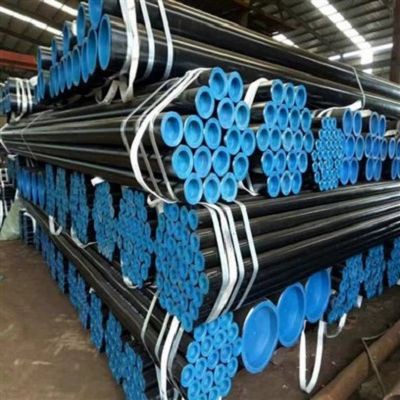
As the global market for ERW Structure Pipe continues to grow, there is an increasing emphasis on product standardization and certification. Standards such as ASTM A53 define the requirements for ERW steel pipes in terms of chemical composition, mechanical properties, and dimensional tolerances. ERW Steel Pipe ASTM A53 Pipe is a widely recognized standard that ensures the quality and reliability of the pipes.
Certification from independent third-party organizations is also becoming more important. For example, ISO 9001 certification indicates that a company has a quality management system in place to ensure consistent product quality. Other certifications, such as API (American Petroleum Institute) certifications, are specific to the oil and gas industry and are required for pipes used in critical applications.
5. Application-Specific Design
With the increasing complexity of various industries, there is a growing demand for ERW Structure Pipe that is designed specifically for different applications. In the construction industry, for example, pipes are used in a wide range of structures, from high-rise buildings to bridges. Each application has its own unique requirements in terms of strength, stiffness, and durability. Manufacturers are now developing pipes that are optimized for these specific applications, taking into account factors such as load capacity, seismic resistance, and fire resistance.
In the oil and gas industry, ERW Line Pipe is used to transport oil, gas, and other fluids over long distances. These pipes need to be able to withstand high pressures, harsh environmental conditions, and potential damage from external sources. As a result, there is ongoing research and development to improve the performance of ERW line pipes, such as increasing their resistance to internal and external corrosion and enhancing their mechanical properties.
6. Sustainability
Sustainability is becoming an increasingly important consideration in the R&D of ERW Structure Pipe. The steel industry is one of the largest energy consumers and greenhouse gas emitters. To address these issues, manufacturers are exploring ways to reduce the environmental impact of their products. This includes using recycled steel in the production process, improving energy efficiency in manufacturing operations, and developing more sustainable coating technologies.
For example, some companies are using electric arc furnaces (EAFs) to melt recycled steel, which requires less energy compared to traditional blast furnaces. Additionally, the development of water-based coatings is reducing the use of volatile organic compounds (VOCs), which are harmful to the environment and human health.
7. Digitalization and Industry 4.0
The concept of Industry 4.0 is also making its way into the ERW Structure Pipe industry. Digitalization technologies such as the Internet of Things (IoT), artificial intelligence (AI), and big data analytics are being used to improve the efficiency and quality of the manufacturing process. IoT sensors can be installed on the production equipment to monitor various parameters in real-time, such as temperature, pressure, and vibration. This allows for early detection of potential problems and enables proactive maintenance, reducing downtime and improving productivity.
AI and big data analytics can be used to analyze the large amount of data generated during the manufacturing process. By identifying patterns and trends, manufacturers can optimize the production process, improve product quality, and reduce costs. For example, AI algorithms can be used to predict the quality of the welds based on the welding parameters, allowing for real-time adjustments to ensure consistent quality.
Conclusion
The research and development trends for ERW Structure Pipe are driven by the need to meet the evolving demands of various industries, improve product performance, and reduce the environmental impact. As a supplier, it is essential for us to stay at the forefront of these trends and continuously invest in R&D to provide our customers with high-quality and innovative products.
If you are interested in learning more about our ERW Structure Pipe products or have any specific requirements, please feel free to contact us for a detailed discussion. We are committed to providing you with the best solutions to meet your needs.
References
- ASTM International. ASTM A53/A53M - 18 Standard Specification for Pipe, Steel, Black and Hot-Dipped, Zinc-Coated, Welded and Seamless.
- ISO. ISO 9001:2015 Quality management systems - Requirements.
- American Petroleum Institute. API standards for line pipes and other oil and gas industry products.