

Hey there! I'm an ERW Line Pipe supplier, and today I'm gonna talk about how the chemical compositions affect the performance of ERW Line Pipe.
First off, let's understand what ERW Line Pipe is. ERW, or Electric Resistance Welded, pipes are made by rolling metal and then welding it longitudinally across its length. These pipes are widely used in various industries, like oil and gas, construction, and water supply. And the chemical composition of the steel used to make these pipes plays a huge role in determining their performance.
Carbon (C)
Carbon is one of the most important elements in steel. It has a significant impact on the strength and hardness of the ERW Line Pipe. As the carbon content increases, the strength and hardness of the pipe also go up. But there's a trade - off. Higher carbon content can make the pipe more brittle. For instance, if you're using the pipe in an environment where it needs to withstand high - pressure loads, a slightly higher carbon content can be beneficial as it provides better strength. However, in applications where the pipe might be subject to impact or bending, too much carbon can cause it to crack easily.
Let's say you're transporting oil through a pipeline. The pipe needs to be strong enough to handle the pressure of the flowing oil. A pipe with a carbon content in the range of 0.2% - 0.3% can offer a good balance between strength and ductility. On the other hand, if you're using the pipe for a structural support in a building, you might need a bit more carbon for added strength.
Manganese (Mn)
Manganese is another key element. It helps to improve the hardenability and strength of the steel. It also acts as a deoxidizer and a desulfurizer. By combining with sulfur, it forms manganese sulfide, which improves the machinability of the steel. In ERW Line Pipes, manganese helps to enhance the weldability. A proper amount of manganese can ensure that the welded joints are strong and reliable.
For example, when we're manufacturing ERW Steel Pipe Carbon Steel Pipe, a manganese content of around 0.6% - 1.65% is commonly used. This range helps to optimize the strength, ductility, and weldability of the pipe. If the manganese content is too low, the pipe might not have enough strength, and the welds could be weak. If it's too high, it can lead to issues like increased hardness and reduced ductility.
Sulfur (S) and Phosphorus (P)
Sulfur and phosphorus are generally considered impurities in steel. They can have a negative impact on the performance of ERW Line Pipes. Sulfur can cause hot shortness, which means the steel becomes brittle at high temperatures. This is a big problem during the manufacturing process, especially when the pipe is being welded. Phosphorus, on the other hand, can cause cold shortness, making the steel brittle at low temperatures.
In high - quality ERW Line Pipes, the sulfur and phosphorus content is kept as low as possible. Usually, the sulfur content is limited to less than 0.05% and the phosphorus content to less than 0.04%. By controlling these impurities, we can ensure that the pipe has good ductility, toughness, and weldability.
Silicon (Si)
Silicon is often added to steel as a deoxidizer. It helps to remove oxygen from the steel during the melting process. In ERW Line Pipes, silicon can also improve the strength and hardness of the steel. It can enhance the resistance to oxidation and corrosion. For example, in some applications where the pipe is exposed to harsh environments, a small amount of silicon (around 0.15% - 0.35%) can be added to improve the pipe's performance.
Chromium (Cr), Nickel (Ni), and Molybdenum (Mo)
These elements are often added to steel to improve its corrosion resistance, strength, and toughness. Chromium forms a passive oxide layer on the surface of the steel, which protects it from corrosion. Nickel can improve the toughness and ductility of the steel, especially at low temperatures. Molybdenum can enhance the strength and hardenability of the steel.
In applications where the ERW Line Pipe is used in corrosive environments, like offshore oil and gas platforms, pipes with a higher content of these elements are used. For example, ERW Casing Pipe used in oil wells might have a small amount of chromium, nickel, and molybdenum to protect it from the corrosive fluids in the well.
Impact on Different Performance Aspects
Weldability
The chemical composition has a major impact on the weldability of ERW Line Pipes. As we mentioned earlier, elements like manganese and silicon can improve weldability, while sulfur and phosphorus can have a negative effect. A proper balance of these elements is crucial to ensure that the welded joints are strong and free from defects. For instance, when welding ERW Steel Pipe ASTM A53 Pipe, the chemical composition needs to be carefully controlled to meet the welding requirements of the ASTM A53 standard.
Corrosion Resistance
The presence of elements like chromium, nickel, and molybdenum can significantly improve the corrosion resistance of the pipe. In environments where the pipe is exposed to water, chemicals, or salt, these elements form a protective layer on the surface of the pipe, preventing it from rusting and corroding.
Strength and Ductility
The carbon, manganese, and other elements work together to determine the strength and ductility of the pipe. By adjusting the chemical composition, we can tailor the pipe's properties to meet the specific requirements of different applications. For example, in high - pressure applications, we can increase the carbon and manganese content to improve strength, while in applications where flexibility is needed, we can reduce the carbon content and add elements like nickel to improve ductility.
Conclusion
As an ERW Line Pipe supplier, I know how important it is to control the chemical composition of the pipes we produce. The right combination of elements can make a huge difference in the performance of the pipes. Whether it's strength, weldability, corrosion resistance, or ductility, each aspect is affected by the chemical composition.
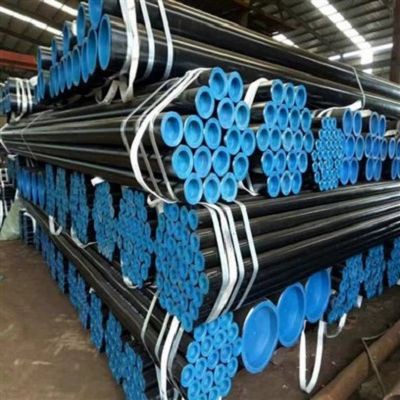

If you're in the market for high - quality ERW Line Pipes, and you want pipes that are tailored to your specific needs, we're here to help. We have a team of experts who can analyze your requirements and recommend the best chemical composition for your application. Don't hesitate to reach out to us for more information and to start a procurement discussion. We're committed to providing you with the best products and services.
References
- ASM Handbook Volume 1: Properties and Selection: Irons, Steels, and High - Performance Alloys
- Steelmaking and Refining Volume 2: Steelmaking and Refining of the Making, Shaping and Treating of Steel