

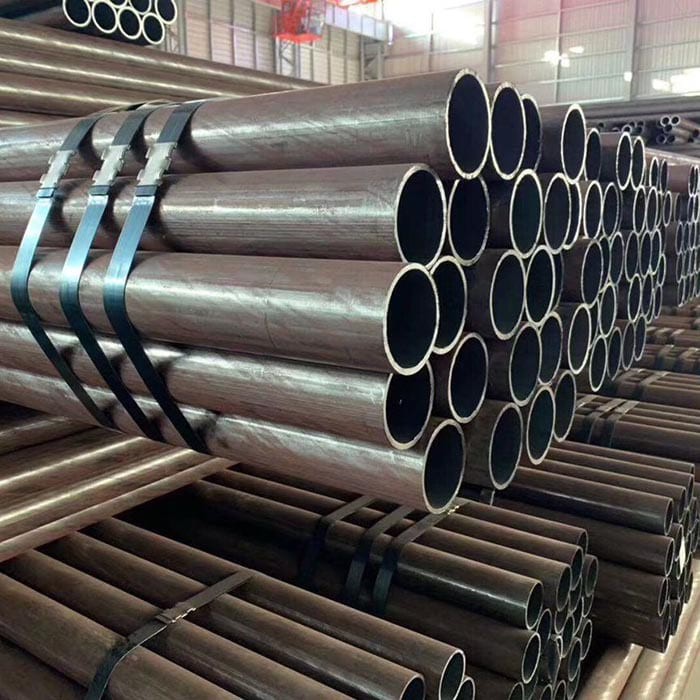
As a seasoned supplier of seamless line pipes, I've been frequently asked about the hardness of these essential industrial components. Understanding the hardness of seamless line pipes is crucial as it directly impacts their performance, durability, and suitability for various applications. In this blog post, I'll delve into the concept of hardness in seamless line pipes, its measurement, influencing factors, and its significance in actual use.

What is Hardness in Seamless Line Pipes?
Hardness in the context of seamless line pipes refers to the material's resistance to permanent deformation, indentation, or scratching. It's a fundamental mechanical property that reflects the pipe's ability to withstand wear, abrasion, and mechanical stress during operation. When a pipe has high hardness, it can better endure the harsh conditions in which it's placed, such as high - pressure fluid flow, contact with abrasive materials, or exposure to rough handling during installation.
Measuring the Hardness of Seamless Line Pipes
There are several methods to measure the hardness of seamless line pipes, each with its own advantages and applications.
Brinell Hardness Test
The Brinell hardness test involves pressing a hard, spherical indenter (usually made of tungsten carbide or steel) into the surface of the pipe under a specific load for a set period. After the load is removed, the diameter of the indentation is measured, and the Brinell hardness number (BHN) is calculated using a formula that takes into account the load, the diameter of the indenter, and the diameter of the indentation. This test is suitable for measuring the hardness of large - grained and rough - surfaced materials, such as some steel seamless line pipes.
Rockwell Hardness Test
The Rockwell hardness test measures the depth of penetration of an indenter (either a diamond cone or a hardened steel ball) into the pipe's surface under a minor load followed by a major load. The difference in the penetration depth between the minor and major loads is used to determine the Rockwell hardness number. This method is quick, relatively non - destructive, and is widely used in industrial settings for testing the hardness of seamless line pipes due to its ease of operation and ability to provide instant results.
Vickers Hardness Test
In the Vickers hardness test, a square - based diamond pyramid indenter is pressed into the surface of the pipe under a specific load. The diagonal length of the resulting square indentation is measured, and the Vickers hardness number (HV) is calculated. This test is highly accurate and can be used to measure the hardness of small areas or thin - walled seamless line pipes.
Factors Influencing the Hardness of Seamless Line Pipes
The hardness of seamless line pipes is influenced by multiple factors, both during the manufacturing process and in the subsequent treatment.
Chemical Composition
The chemical composition of the steel used to make the seamless line pipes plays a significant role in determining its hardness. Elements such as carbon, manganese, chromium, and nickel can increase the hardness of the steel. For example, increasing the carbon content in steel generally leads to higher hardness, but it may also reduce the pipe's ductility and weldability. Alloying elements like chromium and nickel can form hard carbides and intermetallic compounds, further enhancing the hardness and corrosion resistance of the seamless line pipe.
Heat Treatment
Heat treatment processes, such as quenching, tempering, annealing, and normalizing, have a profound impact on the hardness of seamless line pipes. Quenching involves rapidly cooling the heated pipe in a quenching medium, such as oil or water. This process creates a hard microstructure known as martensite, which significantly increases the pipe's hardness. However, quenched pipes are often brittle, so tempering is usually performed afterward to reduce the brittleness and improve the toughness while maintaining an acceptable level of hardness.
Manufacturing Process
The manufacturing process of seamless line pipes also affects their hardness. For instance, in the extrusion process, the deformation and cooling rates can influence the formation of the metal's microstructure, thereby affecting its hardness. Hot - rolled seamless line pipes usually have a different hardness profile compared to cold - drawn ones. Cold - drawing can increase the hardness of the pipe due to the strain - hardening effect, which occurs when the metal is deformed at room temperature.
Significance of Hardness in Seamless Line Pipe Applications
Oil and Gas Industry
In the oil and gas industry, seamless line pipes are used for transporting crude oil, natural gas, and various petroleum products over long distances. These pipes need to have sufficient hardness to resist internal pressure, external abrasion from the soil or rocks, and corrosion from the transported fluids. High - hardness seamless line pipes can better withstand the high - pressure flow of fluids and prevent the formation of cracks or leaks, ensuring the safe and efficient operation of the pipeline system.
Water Supply and Drainage Systems
In water supply and drainage systems, seamless line pipes are used to transport water, sewage, and other fluids. The hardness of the pipes is crucial to resist the impact of solid particles in the water, such as sand and sediment. Additionally, in areas with corrosive groundwater, pipes with appropriate hardness and corrosion - resistance properties can have a longer service life, reducing maintenance and replacement costs.
Structural Applications
In some structural applications, seamless line pipes are used as support structures in buildings, bridges, and industrial facilities. The hardness of the pipes determines their ability to bear the weight and load of the structure. High - hardness pipes can provide better structural stability and prevent deformation under heavy loads.
Our Offerings as a Seamless Line Pipe Supplier
As a leading Seamless Line Pipe supplier, we take pride in providing high - quality seamless line pipes with precisely controlled hardness. Our pipes are made from top - grade steel materials, and we have advanced manufacturing and heat - treatment facilities to ensure that the hardness of our pipes meets or exceeds international standards. Whether you need Seamless Casing Pipe for oil and gas exploration, Seamless Pipe in China for specific engineering projects, or Alloy Seamless Pipe In Stock for industrial applications, we have the right products for you.
Why Choose Us?
We understand that different applications require different levels of hardness. Our technical team can work closely with you to understand your specific requirements and recommend the most suitable pipes. We also offer a wide range of sizes and specifications, ensuring that you can find the perfect seamless line pipes for your project.
Let's Connect
If you're in the market for seamless line pipes and want to learn more about their hardness and how it can benefit your project, please do not hesitate to contact us. We're here to answer all your questions and facilitate a smooth purchasing process. We look forward to the opportunity to partner with you and provide you with the highest - quality seamless line pipes at competitive prices.
References
- Callister, W. D., & Rethwisch, D. G. (2011). Materials Science and Engineering: An Introduction. Wiley.
- ASM Handbook Committee. (1990). ASM Handbook, Volume 8: Mechanical Testing and Evaluation. ASM International.
- Richerson, D. W. (2006). Modern Ceramic Engineering: Properties, Processing, and Use in Design. CRC Press.