

Seamless boiler tubes play a crucial role in various industrial applications, especially in power generation, petrochemical, and heating systems. These tubes are designed to withstand high pressure and temperature, making the surface finish requirements of utmost importance. As a seamless boiler tube supplier, I understand the significance of meeting these requirements to ensure the quality and performance of our products.
Surface Finish Basics
Surface finish refers to the texture or quality of the surface of a seamless boiler tube. It is typically characterized by parameters such as roughness, waviness, and lay. Roughness is the microscopic irregularities on the surface, while waviness represents larger, more long - wavelength deviations. Lay refers to the direction of the predominant surface pattern.

The surface finish of seamless boiler tubes can significantly impact their performance. A smooth surface finish can reduce friction, which is essential when the tubes are used in fluid - carrying applications. It also helps in preventing the accumulation of deposits, such as scale and corrosion products, which can degrade the tube's integrity over time.
Factors Influencing Surface Finish Requirements
Operating Conditions
The operating conditions of the boiler tubes are a primary factor in determining the surface finish requirements. In high - temperature applications, a smooth surface finish can prevent the formation of hot spots, which can lead to premature failure of the tubes. For example, in a power plant boiler, the tubes are exposed to high - temperature steam. A rough surface can cause uneven heat transfer, resulting in thermal stress and potential cracking.
In high - pressure applications, a smooth surface finish can improve the tube's resistance to fatigue. The pressure fluctuations in a boiler system can cause cyclic stress on the tubes. A rough surface can act as stress concentrators, increasing the likelihood of fatigue failure.
Corrosion Resistance
The surface finish also affects the corrosion resistance of seamless boiler tubes. A smooth surface is less likely to trap corrosive substances, such as oxygen, water, and acidic compounds. In environments where the tubes are exposed to corrosive media, such as in the petrochemical industry, a high - quality surface finish can extend the service life of the tubes. For instance, seamless pipes for sour service Nace Seamless Pipe for Sour Service Nace require a smooth surface finish to resist the corrosion caused by hydrogen sulfide and other acidic gases.
Weldability and Joining
If the seamless boiler tubes need to be welded or joined, the surface finish is crucial. A clean and smooth surface ensures better weld quality. Rough or contaminated surfaces can lead to weld defects, such as porosity, lack of fusion, and cracking. This is particularly important in the construction of large - scale boiler systems where multiple tubes need to be joined together.
Specific Surface Finish Requirements
Roughness
The roughness of seamless boiler tubes is usually specified in terms of Ra (arithmetical mean deviation of the roughness profile). For most general - purpose boiler tubes, the Ra value is typically in the range of 0.8 to 3.2 micrometers. However, for more demanding applications, such as those in high - efficiency power plants, the Ra value may need to be lower, around 0.4 to 0.8 micrometers.
A lower Ra value indicates a smoother surface. To achieve this, advanced manufacturing processes such as cold drawing, polishing, and grinding may be employed. Cold drawing can reduce the surface roughness by deforming the tube material and smoothing out the surface irregularities. Polishing and grinding can further refine the surface finish to meet the required Ra value.
Waviness
Waviness is less commonly specified than roughness but can still have an impact on the performance of seamless boiler tubes. Excessive waviness can cause local stress concentrations, especially in areas where the tube is subjected to bending or vibration. The waviness height (Wt) is usually limited to a few micrometers, depending on the application.
Lay
The lay of the surface pattern should be carefully controlled. In most cases, a longitudinal lay (parallel to the tube axis) is preferred for seamless boiler tubes. A longitudinal lay can improve the flow characteristics of the fluid inside the tube and reduce the risk of turbulence and erosion.

Manufacturing Processes to Achieve Surface Finish Requirements
Seamless Tube Manufacturing
The manufacturing process of seamless boiler tubes starts with the production of a solid billet. The billet is heated and then pierced to form a hollow tube. This initial process can already have an impact on the surface finish. The piercing process should be carefully controlled to minimize surface defects such as cracks and pits.
Cold Drawing
Cold drawing is a common process used to improve the surface finish of seamless boiler tubes. In cold drawing, the tube is pulled through a die under cold conditions. This process not only reduces the diameter and wall thickness of the tube but also smooths out the surface. The reduction ratio in cold drawing can be adjusted to achieve the desired surface finish.
Polishing and Grinding
Polishing and grinding are finishing processes that can further enhance the surface finish of seamless boiler tubes. Polishing uses abrasive materials to remove small amounts of material from the surface, resulting in a smoother and more reflective surface. Grinding is a more aggressive process that can be used to remove larger surface irregularities and achieve a precise surface finish.
Quality Control of Surface Finish
As a seamless boiler tube supplier, we implement strict quality control measures to ensure that the surface finish requirements are met. We use advanced measurement techniques such as profilometers to measure the roughness and waviness of the tubes. These instruments provide accurate and reliable data, allowing us to verify that the tubes meet the specified surface finish parameters.
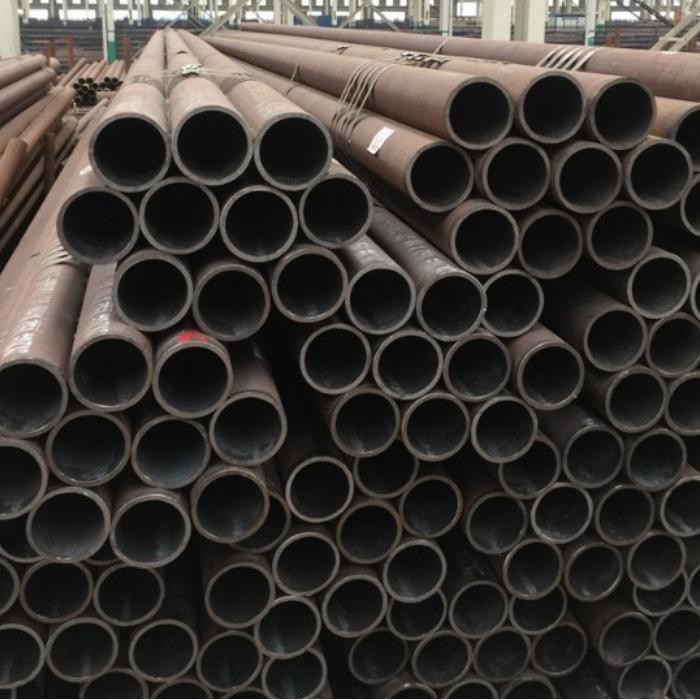
In addition to in - house testing, we also conduct regular third - party inspections to ensure the quality and compliance of our products. This gives our customers confidence in the quality of the seamless boiler tubes they purchase from us.
Conclusion
The surface finish requirements for seamless boiler tubes are critical for their performance, durability, and reliability. Factors such as operating conditions, corrosion resistance, and weldability all influence these requirements. As a seamless boiler tube supplier, we are committed to providing high - quality products that meet or exceed these requirements.
We have a wide range of seamless boiler tubes in stock, including alloy seamless pipes Alloy Seamless Pipe In Stock and seamless casing pipes Seamless Casing Pipe. Our products are manufactured using advanced processes and undergo strict quality control to ensure the best surface finish and overall performance.
If you are in the market for seamless boiler tubes and have specific surface finish requirements, we invite you to contact us for procurement and further discussion. Our team of experts is ready to assist you in finding the right products for your application.
References
- ASME Boiler and Pressure Vessel Code
- API Standards for Seamless Pipes
- ISO Standards for Surface Finish Measurement