

ERW (Electric Resistance Welded) casing pipes are widely used in various industries, including oil and gas, construction, and infrastructure development. As a reliable ERW casing pipe supplier, I understand the importance of proper storage to maintain the quality and integrity of these pipes. In this blog post, I will discuss the storage requirements for ERW casing pipes, ensuring that they remain in optimal condition until they are ready for use.
1. Storage Location
The first consideration when storing ERW casing pipes is the location. The storage area should be well - drained to prevent water accumulation. Standing water can cause corrosion on the surface of the pipes, which can significantly reduce their lifespan and performance. A flat and stable surface is also essential to prevent the pipes from rolling or shifting, which could lead to physical damage.
Ideally, the storage area should be indoors. An indoor storage facility protects the pipes from extreme weather conditions such as rain, snow, and direct sunlight. Ultraviolet rays from the sun can cause the outer coating of the pipes to degrade over time, while rain and snow can introduce moisture that promotes rusting. However, if indoor storage is not feasible, an outdoor storage area with a suitable cover, such as a waterproof tarp, can be used. The cover should be securely fastened to prevent it from being blown away by strong winds.
2. Surface Preparation
Before storing the ERW casing pipes, the storage surface needs to be properly prepared. If the pipes are to be stored on the ground, the area should be cleared of any sharp objects, rocks, or debris that could scratch or damage the pipes. A layer of sand or gravel can be spread on the ground to provide a soft and even surface for the pipes to rest on.
If the pipes are to be stored on racks, the racks should be made of a material that is resistant to corrosion, such as galvanized steel. The racks should be designed to support the weight of the pipes evenly and prevent them from coming into contact with each other. This helps to avoid any potential damage caused by friction or impact between the pipes.
3. Stacking and Arrangement
Proper stacking and arrangement of ERW casing pipes are crucial to prevent damage. The pipes should be stacked in a stable manner to avoid collapse. When stacking the pipes, they should be aligned parallel to each other to ensure even weight distribution.

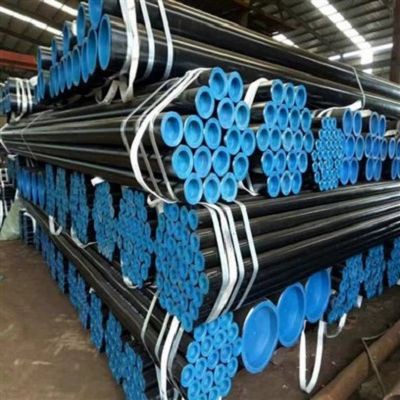
The height of the stack should be limited to prevent excessive pressure on the lower pipes. The maximum stack height depends on the diameter and wall thickness of the pipes, as well as the strength of the storage racks or the ground surface. As a general rule, the stack height should not exceed a certain ratio to the base width of the stack to maintain stability.
It is also important to separate different sizes and grades of pipes during storage. This makes it easier to identify and retrieve the required pipes when needed. Additionally, pipes with different coatings or treatments should be stored separately to prevent any chemical reactions or contamination between them.
4. Protection from Corrosion
Corrosion is one of the biggest threats to ERW casing pipes during storage. To protect the pipes from corrosion, a suitable coating can be applied before storage. There are various types of coatings available, such as epoxy coatings, zinc coatings, and polymer coatings. These coatings act as a barrier between the pipe surface and the environment, preventing moisture and oxygen from reaching the metal and causing corrosion.
In addition to coatings, desiccants can be used in the storage area to reduce the humidity level. Desiccants absorb moisture from the air, creating a dry environment that is less conducive to corrosion. Regular inspection of the pipes for signs of corrosion is also necessary. If any signs of corrosion are detected, appropriate measures should be taken immediately, such as cleaning and reapplying the coating.
5. Handling and Movement
During the storage period, there may be a need to move or handle the ERW casing pipes. When handling the pipes, proper equipment such as cranes, forklifts, or pipe handlers should be used. The equipment should be in good working condition and operated by trained personnel to prevent any accidental damage to the pipes.
When moving the pipes, they should be lifted and transported in a way that maintains their integrity. For example, the lifting points should be carefully selected to avoid excessive stress on the pipes. Pipes should not be dragged on the ground, as this can cause scratches and damage to the coating.
6. Documentation and Inventory Management
Maintaining accurate documentation and inventory management is essential for the storage of ERW casing pipes. Each batch of pipes should be labeled with relevant information, such as the size, grade, date of manufacture, and coating type. This information helps in easy identification and tracking of the pipes.
An inventory system should be established to keep track of the quantity, location, and movement of the pipes. Regular inventory checks should be conducted to ensure that the actual stock matches the recorded inventory. This helps to prevent loss or misplacement of the pipes and ensures that the right pipes are available when needed.
7. Compatibility with Other Materials
If the ERW casing pipes are stored in the same area as other materials, it is important to ensure compatibility. Some materials may release chemicals or substances that can react with the pipes and cause damage. For example, storing pipes near acidic or alkaline substances can lead to corrosion. Therefore, it is necessary to separate the pipes from incompatible materials and ensure proper ventilation in the storage area.
As a leading ERW casing pipe supplier, we offer a wide range of high - quality pipes, including En 10219 Pipes, ERW Structure Pipe, and ERW Steel Pipe ASTM A53 Pipe. Our pipes are manufactured to meet the highest industry standards and are suitable for various applications.
If you are in need of ERW casing pipes or have any questions regarding their storage or use, we encourage you to contact us for procurement and further discussion. Our team of experts is ready to provide you with the best solutions and support.
References
- American Petroleum Institute (API). API Spec 5CT - Specification for Casing and Tubing.
- International Organization for Standardization (ISO). ISO 11960 - Petroleum and natural gas industries - Steel pipes for use as casing or tubing for wells.
- European Committee for Standardization (CEN). EN 10219 - Cold - formed welded structural hollow sections of non - alloy and fine grain steels.