

As a supplier of seamless casing pipes, I understand the critical importance of quality standards in the industry. Seamless casing pipes are widely used in various sectors, including oil and gas exploration, construction, and manufacturing. Ensuring that these pipes meet stringent quality standards is not only a matter of compliance but also a key factor in guaranteeing the safety and efficiency of operations. In this blog, I will delve into the quality standards for seamless casing pipes, shedding light on the key aspects that define their excellence.
Material Quality
The foundation of a high - quality seamless casing pipe lies in the raw materials used. The steel must have the appropriate chemical composition to meet the specific requirements of the application. For example, in the oil and gas industry, pipes need to be resistant to corrosion, high pressure, and extreme temperatures.
The carbon content in the steel is a crucial factor. A proper carbon level ensures the pipe's strength and ductility. Too much carbon can make the pipe brittle, while too little can result in insufficient strength. Other alloying elements such as manganese, silicon, sulfur, and phosphorus also play significant roles. Manganese improves the hardenability and strength of the steel, while silicon helps in deoxidation during the steel - making process. Sulfur and phosphorus are usually kept at low levels as they can have a negative impact on the pipe's mechanical properties.
When it comes to sourcing materials, we, as a seamless casing pipe supplier, are very selective. We work with trusted steel mills that adhere to international standards. For more information on high - quality seamless pipes available in the market, you can visit Seamless Pipe in China.
Manufacturing Process
The manufacturing process of seamless casing pipes is a complex and precise operation. It typically starts with a solid steel billet. The billet is heated to a high temperature and then pierced to form a hollow tube. This process requires high - precision equipment and skilled operators to ensure the uniformity of the pipe's wall thickness and diameter.
The hot - rolling process is another crucial step. During hot - rolling, the pipe is further shaped and refined. The temperature, speed, and pressure during hot - rolling need to be carefully controlled to achieve the desired mechanical properties. After hot - rolling, the pipe may undergo cold - drawing or cold - rolling processes to improve its surface finish and dimensional accuracy.
Quality control is carried out at every stage of the manufacturing process. Non - destructive testing methods such as ultrasonic testing, magnetic particle testing, and eddy - current testing are used to detect any internal or surface defects. Destructive testing, including tensile tests, impact tests, and hardness tests, is also performed to verify the pipe's mechanical properties. Our seamless casing pipes are manufactured with strict adherence to industry - recognized standards, and we ensure that each pipe meets the required specifications before leaving our facility.
Dimensional Accuracy
Dimensional accuracy is of utmost importance for seamless casing pipes. The outer diameter, wall thickness, and length of the pipe must be within the specified tolerances. Inaccurate dimensions can lead to problems during installation, such as improper fitting or leakage.
The outer diameter of the pipe affects its compatibility with other components in the system. A deviation from the standard outer diameter can cause difficulties in connecting the pipe to valves, fittings, or other pipes. Wall thickness is critical as it determines the pipe's ability to withstand pressure. A thinner - than - specified wall may result in pipe failure under high - pressure conditions.

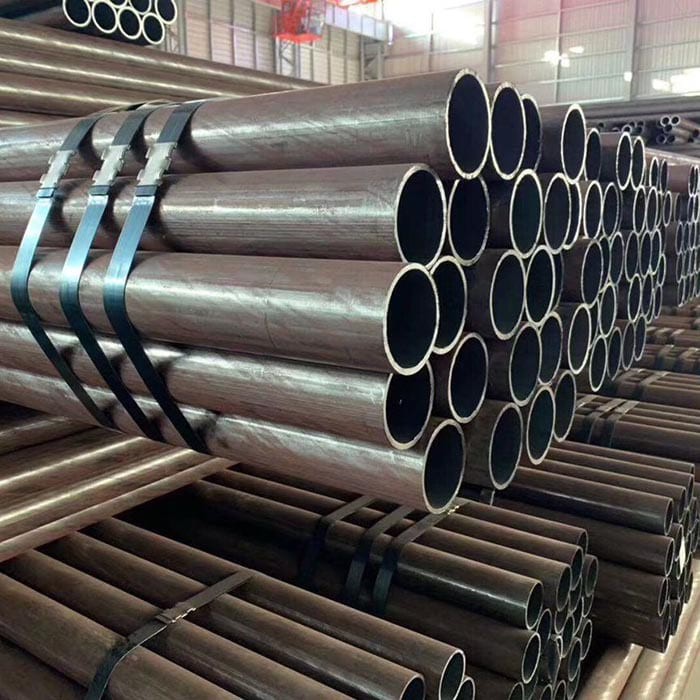
We use advanced measuring tools and techniques to ensure the dimensional accuracy of our seamless casing pipes. Laser measurement systems and calipers are used to measure the outer diameter and wall thickness, while length is measured with high - precision measuring tapes. Our pipes conform to international standards such as ASTM and API, which have well - defined dimensional tolerances. For more details on pipes that meet strict dimensional standards, you can refer to Seamless Steel Pipe ASTM A53 A106 Pipe.
Mechanical Properties
The mechanical properties of seamless casing pipes are essential for their performance in different applications. Tensile strength is one of the most important properties. It measures the maximum stress a pipe can withstand before breaking. Yield strength, on the other hand, indicates the stress at which the pipe begins to deform plastically.
Elongation is another key mechanical property. It represents the percentage increase in the length of the pipe before it breaks during a tensile test. A higher elongation value indicates better ductility, which means the pipe can deform without fracturing under certain conditions. Impact toughness is also crucial, especially in applications where the pipe may be subjected to sudden shocks or vibrations.
To ensure that our seamless casing pipes have excellent mechanical properties, we conduct comprehensive testing. We follow international standards such as ASTM A370 for mechanical testing. Our pipes are designed to meet or exceed the mechanical property requirements of various industries. For pipes with specific mechanical property requirements, such as those in corrosive environments, you can explore ASTM A333 Gr6 Nace Mr0175 Seamless Pipe.
Corrosion Resistance
In many applications, especially in the oil and gas industry, corrosion resistance is a top priority. Seamless casing pipes are often exposed to harsh environments containing corrosive substances such as saltwater, hydrogen sulfide, and carbon dioxide.
To enhance corrosion resistance, various methods can be employed. One common approach is to use corrosion - resistant alloys. For example, pipes made of stainless steel or alloy steel with specific corrosion - resistant elements can offer better protection against corrosion. Surface treatment is another option. Coating the pipe with epoxy, polyethylene, or other protective coatings can create a barrier between the pipe and the corrosive environment.
We offer a range of seamless casing pipes with different levels of corrosion resistance to meet the diverse needs of our customers. Our technical team can provide advice on the most suitable pipe material and surface treatment for a particular application, taking into account the specific corrosion factors present in the environment.
Certification and Compliance
Certification is an important indicator of the quality of seamless casing pipes. Our pipes are certified to meet international standards such as API (American Petroleum Institute) and ASTM (American Society for Testing and Materials). These certifications ensure that the pipes have been manufactured, tested, and inspected in accordance with recognized industry practices.
Compliance with environmental regulations is also a key consideration. We ensure that our manufacturing processes are environmentally friendly and that our products do not contain any harmful substances that could pose a risk to the environment or human health.
Conclusion
In conclusion, the quality standards for seamless casing pipes encompass multiple aspects, including material quality, manufacturing process, dimensional accuracy, mechanical properties, corrosion resistance, and certification. As a supplier, we are committed to providing high - quality seamless casing pipes that meet the strictest industry standards.
If you are in need of seamless casing pipes for your project, we invite you to contact us for a detailed discussion. Our experienced sales team can provide you with more information about our products, pricing, and delivery options. We look forward to working with you and helping you find the best seamless casing pipe solutions for your specific requirements.
References
- American Petroleum Institute (API). API Standards for Casing and Tubing.
- American Society for Testing and Materials (ASTM). ASTM Standards for Seamless Steel Pipes.
- Various technical literature on steel manufacturing and pipe production.