

As a seasoned supplier of seamless steel pipes, I've witnessed firsthand the pivotal role these pipes play across various industries. Their strength is not just a matter of durability but a critical factor that determines their performance in diverse applications. In this blog, I'll delve into the key factors that affect the strength of seamless steel pipes, offering insights based on years of experience in the field.
Chemical Composition
The chemical composition of seamless steel pipes is the cornerstone of their strength. Different elements contribute to various mechanical properties, and understanding these relationships is crucial.
Carbon (C) is one of the most influential elements. An increase in carbon content generally leads to higher strength but can also reduce ductility and weldability. For example, high - carbon seamless steel pipes are often used in applications where high strength is required, such as in the construction of heavy - duty machinery. However, they need to be carefully handled during processing to avoid brittleness.
Manganese (Mn) is another important element. It improves the hardenability and strength of the steel. Manganese combines with sulfur to form manganese sulfide, which helps to reduce the harmful effects of sulfur on the steel's properties. In seamless steel pipes, an appropriate amount of manganese can enhance the overall strength and toughness, making the pipes more resistant to impact and wear.
Chromium (Cr) is well - known for its ability to increase corrosion resistance and strength. In seamless boiler tubes Seamless Boiler Tube, chromium is often added to improve the pipe's resistance to high - temperature corrosion and oxidation. This is essential in boiler applications where the pipes are exposed to high - temperature steam and chemicals.
Nickel (Ni) is used to improve the toughness and ductility of steel at low temperatures. In cold - climate regions or applications where the pipes are subjected to low - temperature environments, such as in Arctic oil and gas exploration, seamless steel pipes with a certain amount of nickel can maintain their strength and flexibility.
Manufacturing Process
The manufacturing process of seamless steel pipes has a profound impact on their strength. There are mainly two methods: the hot - rolling process and the cold - drawing process.
The hot - rolling process is widely used for producing large - diameter seamless steel pipes. In this process, the steel billet is heated to a high temperature and then rolled through a series of rollers. The high temperature allows the steel to be easily deformed, and the rolling process refines the grain structure of the steel. A fine - grained structure generally results in higher strength and better toughness. However, the hot - rolling process may also introduce some internal stresses in the pipes, which need to be relieved through subsequent heat treatment.
The cold - drawing process is used to produce seamless steel pipes with high precision and smooth surfaces. In this process, the hot - rolled pipes are further processed by drawing them through a die at room temperature. The cold - drawing process can increase the strength of the pipes by work - hardening the steel. Work - hardening occurs when the steel is deformed plastically, and dislocations within the crystal structure interact and multiply, making it more difficult for the material to deform further. As a result, the strength of the cold - drawn seamless steel pipes can be significantly higher than that of the hot - rolled ones.
Heat Treatment
Heat treatment is a crucial step in enhancing the strength of seamless steel pipes. Different heat - treatment processes can be used to achieve specific mechanical properties.
Normalizing is a common heat - treatment process. In normalizing, the steel pipes are heated to a specific temperature above the critical point and then cooled in air. This process refines the grain structure of the steel, improving its strength and toughness. Normalized seamless steel pipes are often used in general engineering applications where a good balance of strength and ductility is required.
Quenching and tempering is a more advanced heat - treatment process. Quenching involves heating the steel pipes to a high temperature and then rapidly cooling them in a quenching medium, such as water or oil. This results in a very hard and strong structure but also makes the steel brittle. Tempering is then carried out to relieve the internal stresses and reduce the brittleness. Quenched and tempered seamless steel pipes are used in high - stress applications, such as in the automotive and aerospace industries.
Microstructure
The microstructure of seamless steel pipes is closely related to their strength. The most common microstructures in steel include ferrite, pearlite, bainite, and martensite.
Ferrite is a soft and ductile phase in steel. It has relatively low strength but high plasticity. In some seamless steel pipes, a certain amount of ferrite is present to provide good formability. However, if the ferrite content is too high, the overall strength of the pipes will be reduced.
Pearlite is a lamellar structure composed of ferrite and cementite. It has a higher strength than ferrite and provides a good balance between strength and ductility. Seamless steel pipes with a pearlitic microstructure are widely used in various structural applications.
Bainite is a fine - grained microstructure that forms at intermediate cooling rates. It has high strength and good toughness. Seamless steel pipes with a bainitic microstructure are suitable for applications where high strength and impact resistance are required, such as in the construction of bridges and high - rise buildings.
Martensite is a very hard and brittle phase that forms during rapid quenching. While martensite has extremely high strength, its brittleness makes it unsuitable for direct use. However, through proper tempering, martensite can be transformed into a more ductile and useful structure, which is often used in high - strength seamless steel pipes for critical applications.
External Factors
External factors also play a role in affecting the strength of seamless steel pipes during their service life.
Corrosion is a major threat to the strength of seamless steel pipes. When the pipes are exposed to corrosive environments, such as in chemical plants or marine applications, the surface of the pipes will be gradually corroded. This reduces the cross - sectional area of the pipes, leading to a decrease in their load - bearing capacity. To prevent corrosion, various protective coatings and corrosion - resistant materials can be used.
Mechanical stress is another important factor. Seamless steel pipes are often subjected to different types of mechanical stresses, such as tensile stress, compressive stress, and shear stress. If the applied stress exceeds the strength limit of the pipes, they may fail. Therefore, in the design and installation of seamless steel pipes, it is necessary to accurately calculate the stress conditions and select the appropriate pipes with sufficient strength.
Temperature can also affect the strength of seamless steel pipes. At high temperatures, the strength of steel generally decreases due to the softening of the material. In high - temperature applications, such as in power plants and refineries, special high - temperature - resistant seamless steel pipes need to be used. At low temperatures, the ductility of steel may decrease, and the pipes may become more brittle, increasing the risk of fracture.
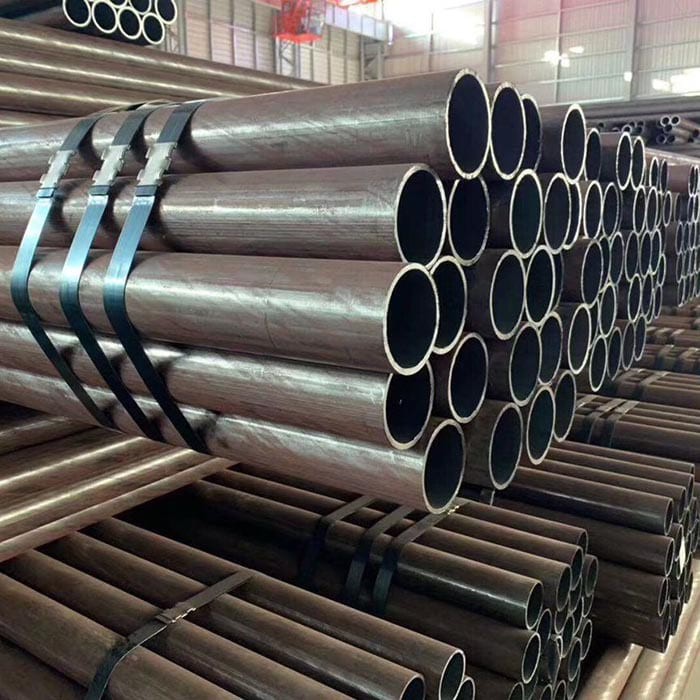

In conclusion, the strength of seamless steel pipes is affected by multiple factors, including chemical composition, manufacturing process, heat treatment, microstructure, and external factors. As a seamless steel pipe supplier, we pay close attention to every aspect of the production process to ensure that our products meet the highest quality standards. Whether you need seamless structure pipes Seamless Structure Pipe for construction or seamless pipes in China Seamless Pipe in China for various industrial applications, we can provide you with high - strength and reliable products. If you are interested in our seamless steel pipes, please feel free to contact us for further procurement discussions.
References
- ASM Handbook Committee. ASM Handbook Volume 1: Properties and Selection: Irons, Steels, and High - Performance Alloys. ASM International, 2007.
- Bhadeshia, H. K. D. H., & Honeycombe, R. W. K. Steel: Microstructure and Properties. Elsevier, 2017.
- DeGarmo, E. Paul, Black, J. T., & Kohser, Ronald A. Materials and Processes in Manufacturing. Wiley, 2012.