

As a seasoned supplier of seamless steel pipes, I've witnessed firsthand the diverse needs and preferences of our clients across various industries. One of the most common questions we encounter is about the differences between cold-drawn and hot-rolled seamless steel pipes. In this blog post, I'll delve into the intricacies of these two manufacturing processes, their unique characteristics, and how they impact the final product.
Manufacturing Processes
Hot-Rolled Seamless Steel Pipes
Hot-rolling is a process that involves heating a solid billet of steel to extremely high temperatures, typically above 1,700°F (927°C). At this temperature, the steel becomes malleable and can be easily shaped. The heated billet is then pierced through the center using a mandrel to create a hollow tube. This tube is then passed through a series of rolling mills to reduce its diameter and wall thickness to the desired specifications.
The high temperatures during the hot-rolling process allow the steel to recrystallize, which results in a more uniform grain structure and improved mechanical properties. This process is generally faster and more cost-effective than cold-drawing, making it suitable for large-scale production of seamless steel pipes.
Cold-Drawn Seamless Steel Pipes
Cold-drawing, on the other hand, starts with a hot-rolled seamless steel pipe. The pipe is first pickled to remove any scale or impurities from its surface. It is then lubricated and pulled through a die to reduce its diameter and wall thickness. This process is typically repeated multiple times, with intermediate annealing steps to relieve internal stresses and improve the ductility of the steel.
Cold-drawing allows for greater precision and control over the dimensions and surface finish of the pipe. The process also work-hardens the steel, increasing its strength and hardness. However, cold-drawing is a more time-consuming and expensive process than hot-rolling, making it more suitable for applications that require high precision and tight tolerances.
Characteristics and Properties
Dimensional Accuracy
Cold-drawn seamless steel pipes offer superior dimensional accuracy compared to hot-rolled pipes. The cold-drawing process allows for tighter tolerances on the outer diameter, wall thickness, and length of the pipe. This makes cold-drawn pipes ideal for applications where precise fit and alignment are critical, such as in the automotive, aerospace, and machinery industries.
Hot-rolled seamless steel pipes, on the other hand, have slightly larger dimensional tolerances. While this may not be a concern for some applications, it can be a limiting factor in others. However, hot-rolled pipes are generally more cost-effective and can be used in applications where dimensional accuracy is less critical, such as in construction and infrastructure projects.
Surface Finish
Cold-drawn seamless steel pipes have a smoother and more uniform surface finish compared to hot-rolled pipes. The cold-drawing process removes any surface imperfections and leaves a clean, polished surface. This makes cold-drawn pipes more resistant to corrosion and easier to clean, which is important in applications where hygiene and cleanliness are a concern, such as in the food and beverage industry.
Hot-rolled seamless steel pipes have a rougher surface finish due to the presence of scale and other surface impurities. While this can be improved through additional processing steps, such as pickling and shot blasting, it is generally not as smooth as the surface finish of cold-drawn pipes.
Mechanical Properties
The mechanical properties of cold-drawn and hot-rolled seamless steel pipes can vary depending on the specific steel grade and manufacturing process. However, in general, cold-drawn pipes have higher strength and hardness compared to hot-rolled pipes. This is due to the work-hardening effect of the cold-drawing process, which increases the density of dislocations in the steel and makes it more resistant to deformation.
Hot-rolled pipes, on the other hand, have better ductility and toughness compared to cold-drawn pipes. The high temperatures during the hot-rolling process allow the steel to recrystallize, which results in a more uniform grain structure and improved ductility. This makes hot-rolled pipes more suitable for applications where the pipe needs to be bent, formed, or welded without cracking.
Applications
Cold-Drawn Seamless Steel Pipes
Cold-drawn seamless steel pipes are commonly used in applications that require high precision, tight tolerances, and excellent surface finish. Some of the common applications of cold-drawn pipes include:
- Automotive Industry: Cold-drawn pipes are used in the manufacturing of automotive components, such as drive shafts, axles, and suspension systems. The high strength and dimensional accuracy of cold-drawn pipes make them ideal for these applications.
- Aerospace Industry: Cold-drawn pipes are used in the aerospace industry for applications such as hydraulic systems, fuel lines, and structural components. The high strength-to-weight ratio and corrosion resistance of cold-drawn pipes make them suitable for these demanding applications.
- Machinery Industry: Cold-drawn pipes are used in the machinery industry for applications such as hydraulic cylinders, pneumatic cylinders, and precision shafts. The smooth surface finish and tight tolerances of cold-drawn pipes make them ideal for these applications.
Hot-Rolled Seamless Steel Pipes
Hot-rolled seamless steel pipes are commonly used in applications that require large quantities of pipes with less stringent dimensional requirements. Some of the common applications of hot-rolled pipes include:
- Construction Industry: Hot-rolled pipes are used in the construction industry for applications such as structural support, scaffolding, and fencing. The large diameter and thick wall thickness of hot-rolled pipes make them suitable for these applications.
- Oil and Gas Industry: Hot-rolled pipes are used in the oil and gas industry for applications such as pipelines, well casings, and drill pipes. The high strength and toughness of hot-rolled pipes make them suitable for these harsh environments.
- Power Generation Industry: Hot-rolled pipes are used in the power generation industry for applications such as boiler tubes, steam pipes, and condenser tubes. The high temperature and pressure resistance of hot-rolled pipes make them suitable for these applications.
Conclusion
In conclusion, the choice between cold-drawn and hot-rolled seamless steel pipes depends on the specific requirements of the application. Cold-drawn pipes offer superior dimensional accuracy, surface finish, and strength, making them ideal for applications that require high precision and tight tolerances. Hot-rolled pipes, on the other hand, offer better ductility, toughness, and cost-effectiveness, making them suitable for applications that require large quantities of pipes with less stringent dimensional requirements.
As a seamless steel pipe supplier, we offer a wide range of cold-drawn and hot-rolled seamless steel pipes to meet the diverse needs of our clients. Whether you need Seamless Boiler Tube, Seamless Pipe for Sour Service Nace, or Seamless Steel Pipe ASTM A53 A106 Pipe, we have the expertise and resources to provide you with the right solution.

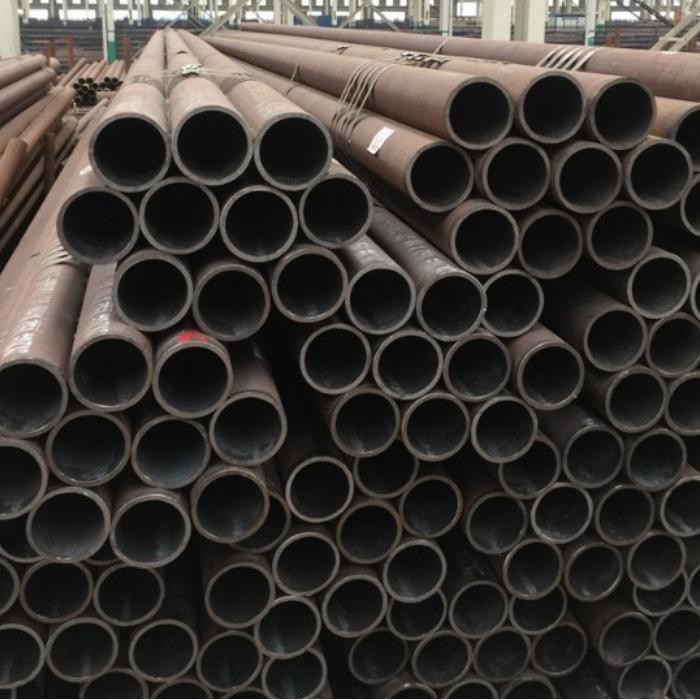
If you have any questions or need further information about our seamless steel pipes, please don't hesitate to contact us. We look forward to working with you to meet your seamless steel pipe needs.
References
- ASM Handbook, Volume 14A: Metalworking: Bulk Forming. ASM International, 2013.
- The Welding Institute. Steel Pipe Manufacturing Processes. TWI, 2018.
- American Iron and Steel Institute. Seamless Steel Pipe and Tube. AISI, 2020.