

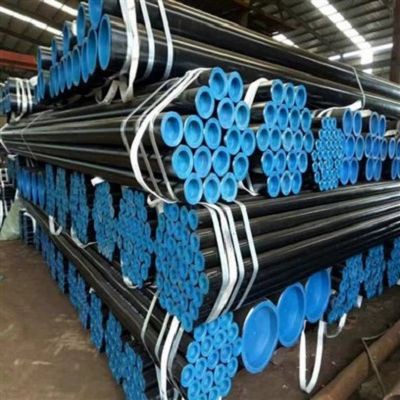
Hey there! As a supplier of En 10219 pipes, I'm super excited to share the ins and outs of the certification requirements for these pipes with you. En 10219 is a European standard that specifies the technical delivery conditions for cold-formed welded structural hollow sections of non-alloy and fine-grained steels. These pipes are used in a ton of different applications, from construction to machinery, so getting the certification right is crucial.
First off, let's talk about the general requirements. The pipes need to meet certain chemical composition criteria. For non-alloy steels, the carbon content, for example, has to be within a specific range. This is important because the chemical makeup affects the pipe's properties like strength and corrosion resistance. If the carbon content is too high, the pipe might be too brittle. Not to mention other elements like manganese, silicon, sulfur, and phosphorus. Each of these has its own allowable limits.
When it comes to mechanical properties, the pipes have to pass some rigorous tests. Tensile testing is a big one. We need to make sure the pipes can withstand a certain amount of pulling force without breaking. The yield strength and the ultimate tensile strength are key values here. The yield strength is the point at which the pipe starts to deform permanently, and the ultimate tensile strength is the maximum force the pipe can handle before it fails.
Another important mechanical property test is the impact test. This checks how well the pipe can resist sudden impact. It's especially crucial for pipes that might be subject to rough handling or in environments where they could get hit. We usually test at different temperatures because the pipe's performance can change depending on how hot or cold it is.
Now, let's get into the manufacturing process requirements. The pipes are usually made through electric resistance welding (ERW). This process involves heating the edges of the steel strip and then pressing them together to form a pipe. For the En 10219 certification, the welding needs to be of high quality. There can't be any obvious defects like cracks, porosity, or lack of fusion in the weld area.
The dimensional requirements are also super important. The pipes have to be within tight tolerances when it comes to things like outside diameter, wall thickness, and length. If the diameter is off by too much, it might not fit properly in the application it's intended for. And inconsistent wall thickness can lead to uneven stress distribution, which can cause problems down the road.
Inspection and testing are ongoing processes throughout the production of En 10219 pipes. Non - destructive testing methods like ultrasonic testing and magnetic particle testing are used to check for internal and surface defects respectively. These tests are really important because they can catch problems that might not be visible to the naked eye. And then there are the destructive tests, like the ones I mentioned earlier, which are done on sample pipes to confirm the mechanical properties.
Documentation is another key part of the certification process. We have to keep detailed records of everything from the raw materials we use to the test results and manufacturing processes. This documentation is proof that the pipes meet the En 10219 standards. It's like a paper trail that shows exactly how the pipes were made and what they're capable of.
If you're in the market for high - quality En 10219 pipes, you'll want to make sure the supplier has all the proper certifications. At our place, we take the certification process seriously because we know it's what gives our customers confidence in our products.
Now, if you're interested in specific types of pipes, we offer a wide range, including ERW Pipe Scaffolding. These pipes are great for construction scaffolding due to their strength and durability. We also have ERW Steel Pipe Api 5l Pipe, which is often used in the oil and gas industry. And then there's the ERW Steel Pipe ASTM A53 Pipe, which is a popular choice for general-purpose applications.
We understand that every customer has different needs, and we're more than happy to work with you to find the right pipes for your project. Whether you need a small batch for a DIY project or a large order for a major construction site, we've got you covered.
So, if you're thinking about purchasing En 10219 pipes or any of the other pipes we offer, don't hesitate to reach out. We're here to answer all your questions, provide you with detailed information, and help you make the best decision for your needs.
I hope this blog post has given you a good understanding of the certification requirements for En 10219 pipes. If you have any further questions, feel free to ask. We're looking forward to potentially working with you in the future!
References:

- European Committee for Standardization (CEN). EN 10219: Technical delivery conditions for cold - formed welded structural hollow sections of non - alloy and fine - grained steels.