

As a supplier of ERW Line Pipe, I understand the critical importance of enhancing the seismic resistance of these pipes. Earthquakes pose a significant threat to infrastructure, including pipelines, and ensuring the reliability and safety of ERW Line Pipe in seismic - prone areas is a top priority. In this blog, I will share some effective ways to improve the seismic resistance of ERW Line Pipe based on industry knowledge and our practical experience.
1. Material Selection
The choice of material is fundamental in determining the seismic resistance of ERW Line Pipe. High - strength steel is often a preferred option. Steels with higher yield and tensile strengths can better withstand the dynamic loads and stresses generated during an earthquake. For instance, steels that meet the standards of ERW Steel Pipe Api 5l Pipe and ERW Steel Pipe ASTM A53 Pipe are designed to have good mechanical properties.
The chemical composition of the steel also plays a crucial role. Elements such as carbon, manganese, and silicon can influence the strength, toughness, and weldability of the pipe. A well - balanced chemical composition can ensure that the pipe has the necessary ductility to deform without fracturing under seismic forces. For example, a proper amount of manganese can improve the hardenability and strength of the steel, while controlled carbon content can maintain the weldability and toughness.
2. Pipe Design and Geometry
The design and geometry of the ERW Line Pipe can significantly affect its seismic performance. One important aspect is the wall thickness. A thicker - walled pipe generally has higher strength and can better resist the bending and axial forces during an earthquake. However, increasing the wall thickness also has cost implications, so a balance needs to be struck between strength requirements and economic considerations.
The diameter of the pipe is another factor. Smaller - diameter pipes may be more flexible and can better adapt to ground movements during an earthquake. On the other hand, larger - diameter pipes are often used for high - volume fluid transportation, and in such cases, additional design measures may be required to enhance their seismic resistance.
The pipe's end - connection design is also critical. Welded connections should be carefully designed and executed to ensure high - quality joints. For example, using proper welding techniques and pre - heating the pipes before welding can improve the integrity of the welds. Flanged connections, if used, should be tightened properly and have sufficient strength to withstand the seismic loads.
3. Installation and Support
Proper installation of ERW Line Pipe is essential for its seismic resistance. The pipes should be installed with sufficient flexibility to accommodate ground movements. This can be achieved by using expansion joints or flexible couplings at appropriate intervals. Expansion joints can absorb the thermal expansion and contraction of the pipes as well as the ground displacements during an earthquake.
The support system for the pipes is also crucial. The supports should be designed to withstand the seismic forces and prevent excessive movement of the pipes. Rigid supports can transfer the seismic loads directly to the pipes, which may cause damage. Instead, flexible supports or shock - absorbing supports can be used to reduce the impact of the seismic forces on the pipes. For example, spring - loaded supports can provide a certain degree of flexibility and damping.
4. Quality Control during Manufacturing
Strict quality control during the manufacturing process of ERW Line Pipe is a key factor in improving its seismic resistance. Non - destructive testing (NDT) methods such as ultrasonic testing, magnetic particle testing, and radiographic testing should be used to detect any internal or surface defects in the pipes. Defects such as cracks, porosity, or inclusions can significantly weaken the pipes and reduce their seismic performance.
The welding process, which is a critical step in the manufacturing of ERW Line Pipe, should be closely monitored. The welding parameters, such as welding current, voltage, and speed, should be carefully controlled to ensure high - quality welds. In addition, post - weld heat treatment can be used to relieve the residual stresses in the welds and improve the mechanical properties of the pipes.
5. Seismic - Isolation Measures
In some cases, seismic - isolation techniques can be employed to further enhance the seismic resistance of ERW Line Pipe. Seismic isolation involves separating the pipeline from the ground or the supporting structure using isolation devices. For example, rubber bearings or sliding isolation systems can be used to isolate the pipes from the ground movements during an earthquake.
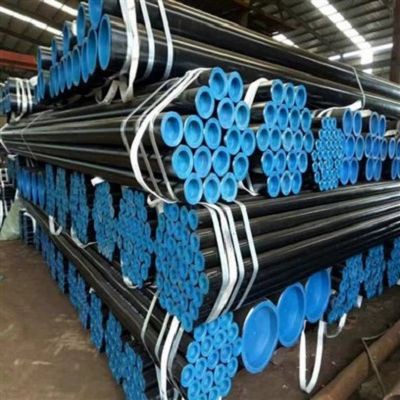

These isolation devices can reduce the transfer of seismic energy to the pipes, allowing them to remain relatively stable. However, the design and installation of seismic - isolation systems require careful consideration of factors such as the type and magnitude of seismic forces, the characteristics of the pipes, and the surrounding environment.
6. Monitoring and Maintenance
Once the ERW Line Pipe is installed, continuous monitoring and regular maintenance are necessary to ensure its long - term seismic resistance. Monitoring systems can be used to detect any changes in the pipe's condition, such as deformation, stress, or leakage. For example, strain gauges can be installed on the pipes to measure the strains during an earthquake or under normal operating conditions.
Regular maintenance activities, such as inspection, cleaning, and corrosion protection, can also help to maintain the integrity of the pipes. Corrosion can weaken the pipes over time, reducing their seismic resistance. Therefore, applying appropriate corrosion - protection coatings and conducting periodic inspections for corrosion are essential.
In conclusion, improving the seismic resistance of ERW Line Pipe requires a comprehensive approach that includes material selection, pipe design, installation, quality control, seismic - isolation measures, and monitoring and maintenance. As a supplier of ERW Line Pipe, we are committed to providing high - quality products and technical support to our customers to ensure the safety and reliability of their pipelines in seismic - prone areas.
If you are interested in purchasing ERW Line Pipe or have any questions about improving the seismic resistance of the pipes, please feel free to contact us for further discussion and negotiation. We look forward to working with you to meet your pipeline needs.
References
- ASCE (American Society of Civil Engineers). Seismic Design of Pipelines.
- API (American Petroleum Institute). Specification for Line Pipe.
- ASTM (American Society for Testing and Materials). Standard Specification for Pipe, Steel, Black and Hot - Dipped, Zinc - Coated, Welded and Seamless.