

Hey there! As a supplier of LSAW Line Pipe, I often get asked about how to calculate the weight of these pipes. It's an important question, especially for those in the construction, oil and gas, and other industries that rely on these pipes. In this blog, I'll walk you through the process of calculating the weight of LSAW Line Pipe, and also give you some insights into why it matters.
Why Calculate the Weight of LSAW Line Pipe?
Before we dive into the calculations, let's talk about why you might need to know the weight of LSAW Line Pipe. For starters, it's crucial for transportation. Knowing the weight helps you determine the appropriate shipping method and the capacity of the vehicles or vessels needed to move the pipes. It also affects the cost of transportation, as heavier loads typically cost more to ship.
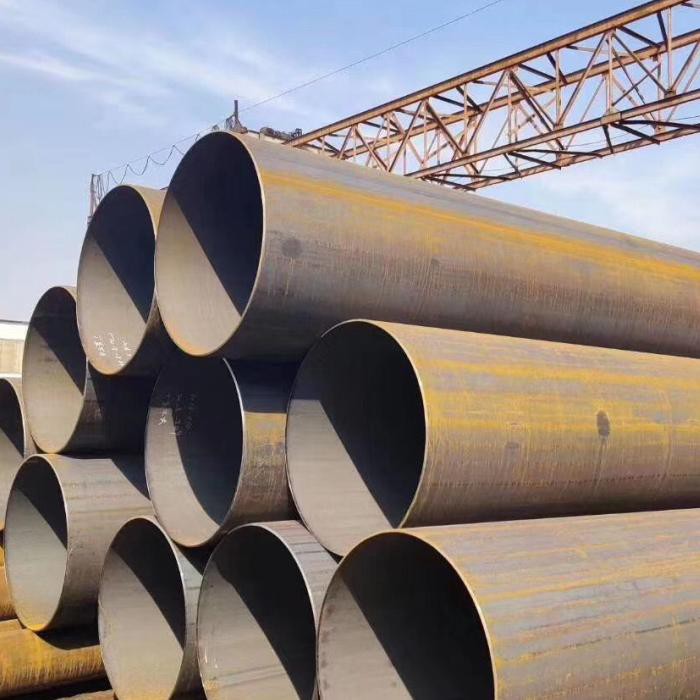

In construction projects, the weight of the pipes is important for structural planning. Engineers need to know the weight to ensure that the supporting structures can handle the load. Additionally, when installing the pipes, the weight influences the equipment required for lifting and positioning.
Factors Affecting the Weight of LSAW Line Pipe
The weight of LSAW Line Pipe depends on several factors. The main ones are the pipe's diameter, wall thickness, and length. The material of the pipe also plays a role, as different materials have different densities. For example, steel pipes are heavier than pipes made from some other materials due to the high density of steel.
The Formula for Calculating the Weight of LSAW Line Pipe
The formula for calculating the weight of a steel pipe is based on the volume of the pipe and the density of the steel. The general formula is:
[ W = \pi \times (D - t) \times t \times L \times \rho ]
Where:
- ( W ) is the weight of the pipe (in kilograms or pounds, depending on the units used for density)
- ( \pi ) is a mathematical constant approximately equal to 3.14159
- ( D ) is the outer diameter of the pipe (in millimeters or inches)
- ( t ) is the wall thickness of the pipe (in millimeters or inches)
- ( L ) is the length of the pipe (in meters or feet)
- ( \rho ) is the density of the steel (in kilograms per cubic meter or pounds per cubic inch)
Let's break down the formula and explain each part.
Outer Diameter (( D ))
The outer diameter of the pipe is the measurement across the outside of the pipe. It's an important dimension as it determines the size of the pipe and how much material is used in its construction. For example, a larger diameter pipe will generally weigh more than a smaller diameter pipe of the same wall thickness and length.
Wall Thickness (( t ))
The wall thickness is the distance from the inner surface of the pipe to the outer surface. A thicker wall means more material, which results in a heavier pipe. The wall thickness is often specified based on the application and the pressure the pipe needs to withstand.
Length (( L ))
The length of the pipe is straightforward. The longer the pipe, the more material there is, and thus the heavier it will be. Pipes can come in various lengths, and the weight calculation needs to account for this.
Density (( \rho ))
The density of the steel depends on the type of steel used. For most common carbon steels, the density is approximately 7850 kilograms per cubic meter or 0.283 pounds per cubic inch. However, different grades of steel may have slightly different densities.
An Example Calculation
Let's say we have an LSAW Line Pipe with an outer diameter (( D )) of 600 millimeters, a wall thickness (( t )) of 10 millimeters, and a length (( L )) of 12 meters. We'll use the density (( \rho )) of 7850 kilograms per cubic meter.
First, we need to convert all the measurements to the same units. Since the density is in kilograms per cubic meter, we'll keep the length in meters and convert the diameter and thickness to meters as well. So, ( D = 0.6 ) meters and ( t = 0.01 ) meters.
Now, we can plug these values into the formula:
[ W = \pi \times (0.6 - 0.01) \times 0.01 \times 12 \times 7850 ]
[ W = 3.14159 \times 0.59 \times 0.01 \times 12 \times 7850 ]
[ W = 3.14159 \times 0.0059 \times 12 \times 7850 ]
[ W = 0.0185353 \times 12 \times 7850 ]
[ W = 0.2224236 \times 7850 ]
[ W \approx 1746.02 \text{ kilograms} ]
So, the weight of this LSAW Line Pipe is approximately 1746.02 kilograms.
Different Standards and Their Impact on Weight Calculation
There are various standards for LSAW Line Pipe, such as ASTM A252 Steel Pipe Casing, LSAW Api 5l Steel Pipe, and Structural Steel Pipe. These standards define the specifications for the pipes, including the allowable tolerances for diameter, wall thickness, and material properties.
When calculating the weight, it's important to consider these standards. For example, if a pipe is manufactured to a specific standard, the actual dimensions may vary slightly from the nominal dimensions. These variations can affect the weight calculation.
Tips for Accurate Weight Calculation
- Use Accurate Measurements: Make sure to measure the outer diameter, wall thickness, and length as precisely as possible. Even small errors in measurement can lead to significant differences in the calculated weight.
- Know the Material Density: Different types of steel have different densities. If you're not sure about the density of the steel used in the pipe, consult the manufacturer or a materials expert.
- Account for Tolerances: As mentioned earlier, pipes may have manufacturing tolerances. Take these into account when calculating the weight for a more accurate result.
Conclusion
Calculating the weight of LSAW Line Pipe is an important task that can have significant implications for transportation, construction, and other aspects of the pipe's use. By understanding the factors that affect the weight and using the appropriate formula, you can make accurate calculations.
If you're in the market for high - quality LSAW Line Pipe and need help with weight calculations or have any other questions, feel free to reach out. We're here to assist you with all your LSAW Line Pipe needs. Whether you're working on a small project or a large - scale industrial application, we can provide the right pipes for you. Contact us to start a procurement discussion and find the best solutions for your requirements.
References
- "Steel Pipe Handbook"
- ASTM International standards documentation
- API standards documentation