

Hey there! I'm a supplier of steel pipe piles, and I often get asked this question: "How much load can steel pipe piles bear?" Well, let's dive right into it and break it down in a way that's easy to understand.
First off, the load - bearing capacity of steel pipe piles isn't a one - size - fits - all answer. There are a bunch of factors that come into play. One of the most important ones is the soil conditions. You see, different types of soil can have a huge impact on how well the pile can hold up a load.
In cohesive soils like clay, the pile's load - bearing capacity is mainly due to the friction between the pile and the soil. The longer the pile is in the clay, the more frictional resistance it can generate. For example, if you have a steel pipe pile that's driven deep into thick clay, it can rely on the adhesion of the clay to the pile surface to support a significant load. On the other hand, in granular soils such as sand, the end - bearing capacity becomes crucial. The pile essentially acts like a column that transfers the load to a more competent layer below, and the diameter of the pile plays a big role here. A wider pile will have a larger area at the end, which can distribute the load over a bigger surface and handle more weight.
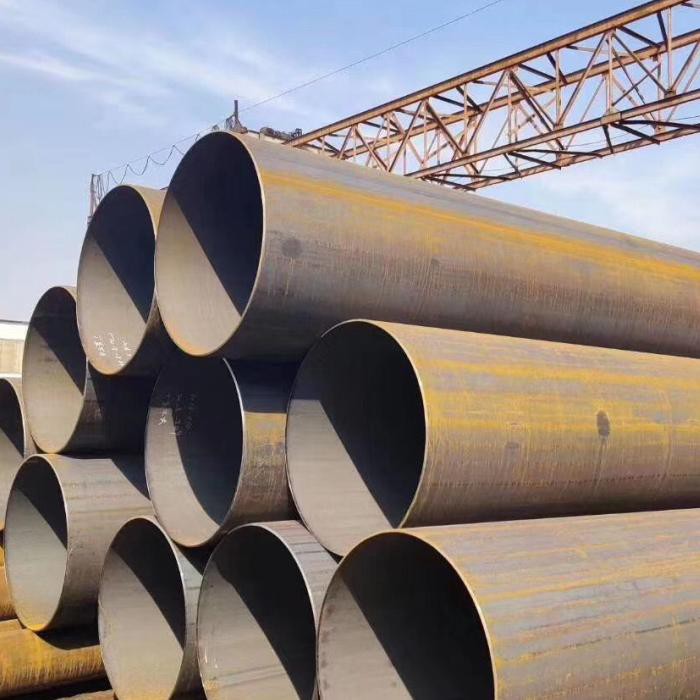
The material properties of the steel pipe itself are also key. High - strength steels can obviously bear more load than lower - grade ones. We offer a variety of steel pipe piles made from different grades of steel, like those conforming to ASTM A252 Steel Pipe Casing. This type of steel pipe casing is known for its durability and strength, which are essential for high - load applications. The wall thickness of the pipe is another factor. A thicker - walled pipe can withstand more stress and deformation, thus having a higher load - bearing capacity.
The installation method matters too. If the pile is driven into the ground, it can compact the surrounding soil, which may increase its load - bearing capacity. However, if it's drilled and then placed, the soil around the pile may not be as compacted, and the load - transfer mechanism could be different.
Let's talk about some calculations. Engineers usually use a combination of empirical formulas and geotechnical analysis to estimate the load - bearing capacity of steel pipe piles. One common approach is the Terzaghi's bearing capacity theory, which takes into account the soil properties, the size of the pile, and the depth of embedment. But keep in mind that these are just estimates, and in real - world scenarios, on - site testing is often required to get an accurate measurement.
For example, in a project where a building is being constructed on a site with a mix of sand and clay, the engineer will first conduct soil tests to determine the soil's shear strength, density, and other properties. Then, based on the design requirements of the building, they'll select an appropriate size and type of steel pipe pile. They might choose a Structural Steel Pipe for its excellent structural integrity.

Once the pile is installed, load tests are carried out. These tests involve applying a gradually increasing load to the pile and measuring the settlement. If the settlement is within an acceptable range, it means the pile can handle the load. But if the settlement is too large, it may indicate that the pile's load - bearing capacity has been exceeded, and adjustments may need to be made, such as adding more piles or using larger - diameter ones.
Another aspect is the type of load. There are two main types: vertical loads and lateral loads. Vertical loads are the most common, like the weight of a building or a bridge. Lateral loads, on the other hand, are caused by wind, earthquakes, or water pressure. Steel pipe piles need to be designed to handle both types of loads. For lateral loads, the pile's flexibility and its connection to the structure become important. A well - designed pile - to - structure connection can transfer the lateral forces effectively and prevent the pile from buckling.
We also offer ASTM A672 Pipe, which is suitable for a wide range of applications where load - bearing capacity is a concern. This type of pipe is often used in offshore structures, where it has to withstand harsh environmental conditions and significant loads from waves and currents.
In conclusion, the load - bearing capacity of steel pipe piles is a complex topic that depends on many factors. As a supplier, we understand the importance of providing high - quality products that meet the specific needs of each project. Whether you're building a small residential house or a large industrial facility, we have the right steel pipe piles for you.
If you're in the market for steel pipe piles and want to discuss your project requirements, feel free to reach out. We're here to help you choose the best solution for your load - bearing needs.
References
- Bowles, J. E. (1996). Foundation analysis and design. McGraw - Hill.
- Terzaghi, K., Peck, R. B., & Mesri, G. (1996). Soil mechanics in engineering practice. Wiley.