

As a supplier of seamless boiler tubes, I've witnessed firsthand the critical role these components play in various industrial applications. One of the most challenging scenarios these tubes face is sudden pressure changes. In this blog, I'll delve into how seamless boiler tubes handle such situations, exploring the science behind their design and performance.
Understanding Seamless Boiler Tubes
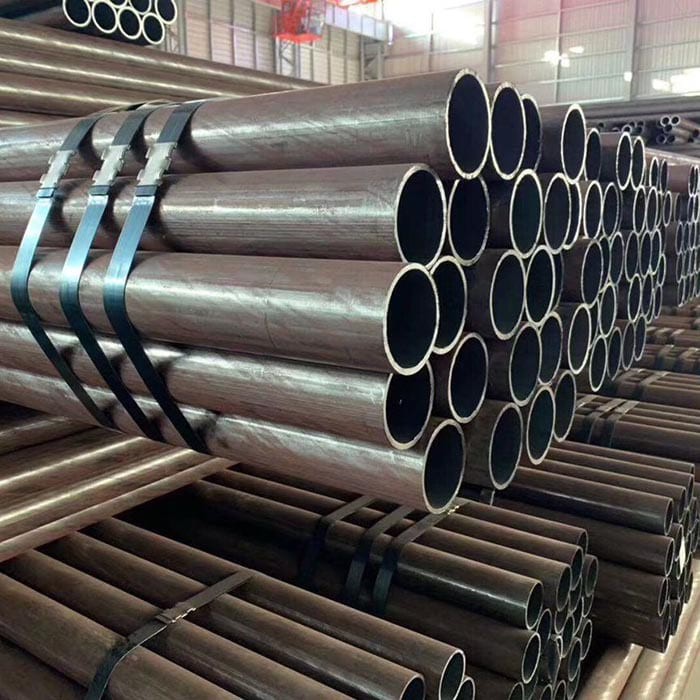
Seamless boiler tubes are integral to many industries, including power generation, petrochemical, and manufacturing. Unlike welded tubes, seamless tubes are manufactured without a weld seam, which gives them several advantages in handling pressure. The absence of a weld eliminates potential weak points, ensuring a more uniform structure and better resistance to stress.
The Structure and Material of Seamless Boiler Tubes
The structure of seamless boiler tubes is designed to withstand high pressures and temperatures. They are typically made from high - quality steel alloys, which are carefully selected based on the specific requirements of the application. For example, some alloys contain elements like chromium, molybdenum, and nickel, which enhance the tube's strength, corrosion resistance, and heat resistance.
The manufacturing process of seamless boiler tubes involves piercing a solid billet to create a hollow tube. This process results in a tube with a consistent wall thickness and a smooth internal and external surface. The uniform wall thickness is crucial for evenly distributing pressure across the tube, preventing stress concentrations that could lead to failure.
How Seamless Boiler Tubes Respond to Sudden Pressure Changes
Elastic Deformation
When a sudden pressure change occurs, seamless boiler tubes first undergo elastic deformation. Elastic deformation is a temporary change in shape that occurs when a material is subjected to stress. In the case of seamless boiler tubes, the tube expands slightly under increased pressure and contracts when the pressure is reduced. This elastic behavior is governed by Hooke's Law, which states that the stress applied to a material is proportional to the strain it undergoes within its elastic limit.
The ability of seamless boiler tubes to undergo elastic deformation without permanent damage is due to their high - strength steel composition. The steel's atomic structure allows it to stretch and compress within a certain range, absorbing the energy associated with the pressure change.
Plastic Deformation and Yield Strength
If the pressure change is large enough to exceed the tube's elastic limit, plastic deformation may occur. Plastic deformation is a permanent change in shape that happens when the stress applied to a material exceeds its yield strength. However, seamless boiler tubes are designed with a high yield strength to minimize the risk of plastic deformation.
The yield strength of a seamless boiler tube is determined by its material composition and the manufacturing process. By carefully controlling these factors, manufacturers can ensure that the tube can withstand significant pressure changes without entering the plastic deformation region.

Fatigue Resistance
In addition to handling sudden pressure changes, seamless boiler tubes also need to resist fatigue. Fatigue is a form of material failure that occurs when a material is subjected to repeated loading and unloading. In a boiler system, pressure changes can occur frequently, leading to cyclic stress on the tubes.
Seamless boiler tubes have excellent fatigue resistance due to their seamless structure and high - quality material. The absence of a weld seam reduces the likelihood of crack initiation, which is a common cause of fatigue failure. Additionally, the uniform grain structure of the steel alloy helps to distribute stress evenly, further enhancing the tube's fatigue resistance.
Applications and the Importance of Handling Pressure Changes
In power generation plants, seamless boiler tubes are used in boilers to convert water into steam. The steam is then used to drive turbines and generate electricity. During the operation of a boiler, pressure changes can occur due to factors such as changes in steam demand, load fluctuations, or startup and shutdown procedures.
If the seamless boiler tubes cannot handle these pressure changes effectively, it can lead to tube failure, which can cause costly downtime and safety hazards. In the petrochemical industry, seamless boiler tubes are used in refineries and chemical plants to transport high - pressure fluids. Sudden pressure changes in these systems can be caused by valve operations, pump failures, or process upsets.
Our Company's Seamless Boiler Tubes
As a supplier of seamless boiler tubes, we take pride in offering high - quality products that can handle sudden pressure changes. Our tubes are manufactured using advanced technology and strict quality control measures to ensure they meet the highest industry standards.
We offer a wide range of seamless boiler tubes, including Seamless Steel Pipe Api 5l Pipe, Seamless Pipe in China, and Seamless Casing Pipe. These tubes are available in various sizes, wall thicknesses, and material grades to meet the specific requirements of different applications.
Contact Us for Procurement
If you are in need of seamless boiler tubes for your project, we invite you to contact us for procurement. Our team of experts can provide you with detailed information about our products, including their specifications, performance, and pricing. We are committed to providing excellent customer service and ensuring that you get the right seamless boiler tubes for your needs.
References
- ASME Boiler and Pressure Vessel Code
- API Standards for Seamless Tubes
- Material Science and Engineering textbooks